
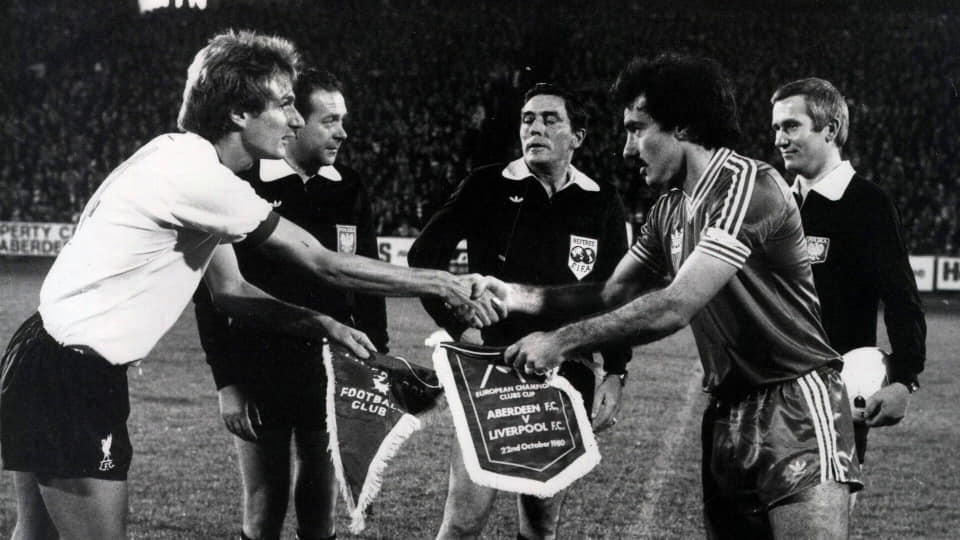
Alex Ferguson’s glorious tenure at Aberdeen peaked with the Cup Winner’s Cup triumph over Real  Madrid in 1983, but, egregious as it may sound, is it possible he could have achieved more during those halcyon days at Pittodrie?
The Dons were, for a period, rightly considered one of the best teams in Europe and their three league triumphs in 1980, 1984 and 1985 earned them three cracks at the biggest prize of them all, the European Cup. Yet on all three occasions Aberdeen struggled to make a significant impact on the competition Ferguson would later define as his Holy Grail.
Prior to Fergie’s arrival, Aberdeen’s successes in Europe, not unlike their domestic achievements, had been relatively minor. For archaic and parochial reasons that demonstrated the traditional lack of vision and administrative competence in Scottish football, upon winning a first-ever League title in 1955 Aberdeen elected not to represent Scotland in the maiden European Cup tournament. Hibernian willingly took their place.
During the 70s campaigns in the UEFA Cup and Cup Winners Cup became more frequent and brought glamour ties (and defeats) against Juventus, Borussia Mönchengladbach & Spurs. By the end of that decade the Dons had failed to get beyond the second round of any European competition in nine attempts.
European Cup 1980/81: Second Round
By leading Aberdeen to the club’s second-ever league title in just his second season in charge at Pittodrie, Alex Ferguson earned what would be the first crack of many during his long career at Europe’s premier club competition.
Their 1980/81 campaign began with an impressive, if narrow single-goal victory over Austria Vienna in the opening round and the substantial reward for progress was a draw that would put them up against the mighty Liverpool in the next round.
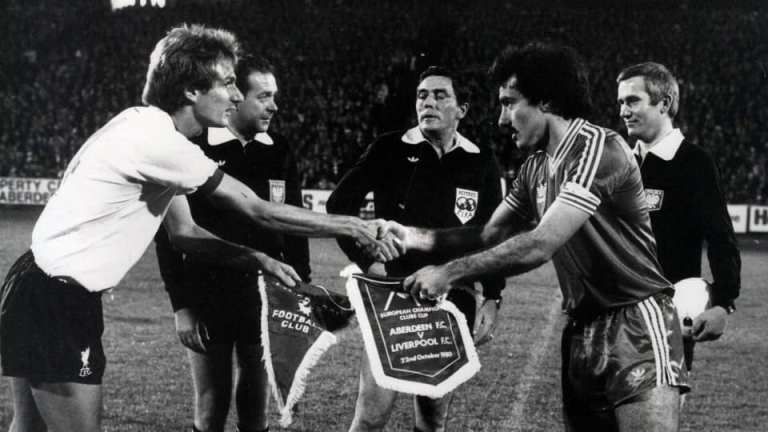
Demand for tickets was exceptional and all-seated Pittodrie would be easily filled to its 24,000 capacity. The large and expectant crowd were hushed almost before they had taken their seats when a superb Liverpool team move was nonchalantly finished off by Terry McDermott. The English visitors led within 5 minutes and that would be all they needed.
Ferguson was given a tactical lesson by Bob Paisley who allowed Aberdeen more of the ball, but few of the chances. ‘We used to play like Aberdeen did in our early days in Europe.’ said Paisley after the match, ‘but we’ve learned that you can’t do this in two-legged games. You have to change your tactics from league games.’
Liverpool had great pedigree at this level having won the competition in both 1977 and 1978 and were enjoying a remarkable run of not having lost at home for 75 games in all competitions. The return leg on Merseyside would be a night of harsh realities for the young Ferguson (only 38 at the time) and his players. Aberdeen were swallowed up by the Anfield roar and crushed by the quality of Liverpool’s world-class side.
Their Scottish core of Graeme Souness, Alan Hansen and Kenny Dalglish were keen to remind their countrymen of their qualities and the latter two would get on the score sheet in a resounding 4-0 win. As the Liverpool Echo noted, Ferguson’s Aberdeen were ‘outplayed, out-thought, out-run.’
In his Autobiography, Ferguson painfully reflected on the game: ‘All we could do was try to ensure that we learned from the painful exposure to proven masters of the techniques and discipline required in European competitions.’
1984/85: First Round
Some of those lessons from 1980 had certainly been learned and Aberdeen’s European record had improved markedly by the time they next had a shot at becoming kings of the continent. Ferguson had even added two European trophies to his CV: in the 1981/82 season he took Aberdeen to the third round of the UEFA Cup where they exited to eventual finalists Hamburg, but the following year he would win the Cup Winners Cup and the Super Cup. This would be followed up by a semi-final defeat to Porto in defence of their title in the 1983/84 campaign.
1984 also saw Aberdeen’s domestic rivals and fellow member of the ‘New Firm’, Dundee United, reach the semi-finals of the European Cup where they were denied a place in the final in controversial circumstances by Roma.

With Scottish club football enjoying its best reputation in Europe since the late 1960s, expectations were high as Aberdeen anticipated a strong 1984/85 European Cup campaign. Those expectations were dashed rather too early with elimination in the opening round to perennial East German Champions, Dynamo Berlin.
Dynamo were in the middle of a run of ten successive East German titles and had reached the quarter-finals the previous year, the furthest they would ever advance in their many attempts. It was a tricky draw for sure, but Aberdeen had defeated West Germany’s best in recent seasons and while Dynamo were an organised side, they had shown that they lacked the physicality and imagination to hurt Europe’s better sides.
A double from Eric Black seemed to be setting the Dons on the road to a comfortable home win, but the tie took on a wholly different complexion when, with 8 minutes remaining, a piece of sloppy defending left Bernd Schulz unmarked at a corner to score. Behind the Iron Curtain it was a similar story. Drawing 1-1 on the night and close to progressing, Aberdeen conceded in the 84th minute to level the tie on aggregate and send the match into extra-time. No further scoring took the game to penalties and both Willie Miller and Eric Black had their efforts saves by Bodo Rudwaleit. The East Germans duly progressed.
1985/86: Quarter-Finals
The 1985/86 European Cup campaign was a pivotal one for Ferguson as it brought the furthest progress his Aberdeen side enjoyed in the competition, all while he was realising his own personal ambitions were growing too big for a provincial Scottish club.
The early rounds were kind. The Icelandic side Akranes was dispatched comfortably in the opening round and then a single Frank Mc Dougall goal was enough to separate the Dons from Swiss champions Servette Geneva.
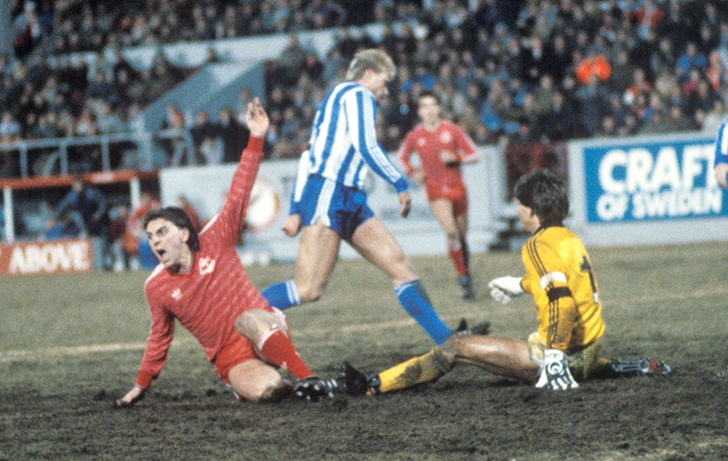
With no English clubs participating in European competition following the Heysel ban, there was a greater opportunity for an outsider to win the competition (as it ultimately proved) and Ferguson clearly felt it could be Aberdeen. Ahead of the second-leg against Servette, the Manchester Evening News featured a piece titled: ‘Ferguson sets his sights on the European big one’, in which he stated – ‘It’s the one we would like all right…in the last eight of the competition if you get that far, anything can happen.’
Hopes were fortified at the Quarter Final stage when Aberdeen avoided the obvious favourites for the competition in Juventus, Barcelona and Bayern Munich and instead drew the Swedes of IFK Gothenburg.
The start the Dons made in the first leg at Pittodrie was encouraging too against opponents still on their winter hiatus. Normally the stalwart of the back line, captain Willie Miller found himself in an attacking left-wing position and finished ruthlessly from 12 yards. Tommy Holmgren leveled for the visitors, but John Hewitt got on the end of a long punt from keeper Bryan Gunn to score and edge Aberdeen one step closer to the semi-finals.
But, just as had been a characteristic of their previous campaign, Aberdeen conceded another crucial away goal. The lightning quick Johnny Ekström chased a through ball and there was no catching him as he rounded Gunn and equalised. Ferguson remained defiant after the match, telling reporters: ‘We will win the second leg – I’m convinced of that.’ He was wrong about that.
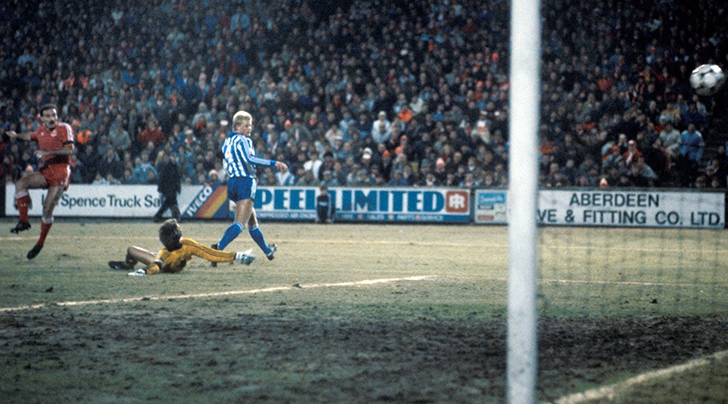
Travelling to the Ullevi Stadium took the Dons back at the scene of their finest hour three years earlier where they had beaten Real Madrid to win the Cup Winners Cup, but the more polished performance this time came from Gothenburg The damage had been done in the first leg and Aberdeen could not lay a glove on the composed Scandinavians. The match ended goalless and again Aberdeen exited once again on the away goals rule.
Within six months Ferguson was off to Manchester and the wait for Aberdeen to return to Europe’s premier tournament approaches 38 years and counting.
Gavin H. MacPhee began his football writing career in the early 2000s reporting on the Highland League in his native Scotland. A graduate of Liverpool John Moores University where he earned a degree in Science and Football, his first book Connecting The Continent covering the early years of the European Cup from 1955-1969 was published in September 2023.

 Beyond The Last Man
In what sense does any of that analyse whether Aberdeen could’ve done better than they did?
I remember all those games clearly and i can vouch that we should have done better and progressed, the BFC Dynamo game for example at Pittodrie, it really could and should have been about 5 or 6 -1 Aberdeen, we hammered them for 88 mins and one sloppy goal at the end cost us the tie, the second leg would have been irrelevant. Even in Berlin again we were comfortable at 1-1 until we gave away a silly free kick in a dangerous position near the end and to cap that all off were 3-1 up in penalties only to throw that away! The IFK game was similar at home in that we were the far better team but they seemed happy to sit in and hit us on the break with pace which they did especially with their second goal, we had a player down and should have put the ball out but we didn’t, lost the ball and they broke away to score, devastating! So in answer to your question, yes Aberdeen could have done better in these games alone.
1