
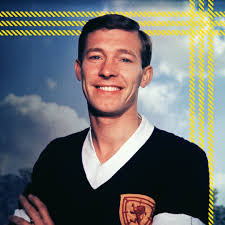
 Arriving in one country just as it was about to explode into war, landing in another as riots were breaking out and told to ‘get back to haggis bashing’ in a third – Scotland’s world tour of 1967 was quite the adventure and one that granted a certain Alex Ferguson the chance to wear the dark blue Scotland shirt for the only time. In those seven tour games Ferguson would score ten goals, unfortunately for the legendary manager in-waiting none of those games were considered official fixtures at the time even if the matches against Israel and Australia were promoted as such by the hosts.
This was a Scottish national team in name, but in reality it was an ‘A’ team. And the entire tour nearly didn’t happen at all. Early in 1967 the SFA decided to arrange a world tour for the close season as a chance to showcase the nation’s bountiful playing talent and reach out to expat communities. However with Celtic and Rangers both appearing in European club competition finals, Billy Bremner’s Leeds United playing in the final of the Fairs Cup and Denis Law’s Manchester United on a mini world tour of their own, the side was stripped of its biggest stars. As a consequence there was just a single player representing the two Glasgow giants – and Andy Penman had only just signed for the Ibrox side.
This lack of star quality put the tour under threat and it was only formally confirmed close to the date of departure. The squad would be called Scotland ‘A’ and was a mixture of fringe internationalists and up-and-coming prospects such as Willie Morgan and Joe Harper. Only Jim McCalliog from the famous 3-2 win over England at Wembley in May would travel. Inevitably the squad was further whittled down with Frank McLintock injured and Eddie McCreadie needed for Chelsea’s FA Cup Final appearance.
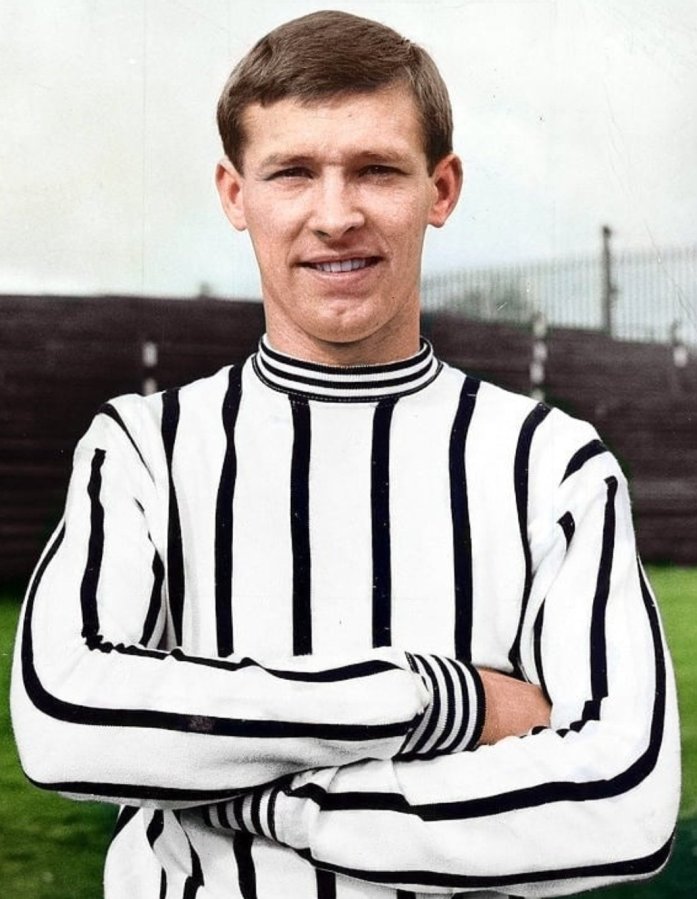
Alex Ferguson had been on standby for the England game due to a knee injury to Law, but the Manchester United striker recovered in time. The 25-year-old Ferguson had shown imperious form in scoring 66 goals in 89 appearances for Dunfermline over the past three seasons and he was desperate to play for his country, however competition for places was fierce with Law, Ian St John, Colin Stein, Willie Wallace and Stevie Chalmers all ahead of him. Ferguson was the right man at the wrong time in the nation’s footballing history. The Scots were led by newly-installed manager Bobby Brown whose first match in charge had been the famous Wembley win and Brown knew Ferguson well having coached him at St Johnstone in the early 60s.
War dance in the Middle East
The Scots arrived in Israel to the aural accompaniment of rocket fire amid ongoing skirmishes in the lead up to what would become known as the Six-Day War. In Tel Aviv Scotland faced probably the best side Israeli had assembled with a line-up that included national heroes Giora Spiegel and Shua Feigenbaum, but it was the visitors who emerged victorious on a scorching hot day, winning 2-1 in front of a crowd of 27,000. Willie Morgan scored the opener and Ferguson netted the 83rd minute winner after Spiegel had equalised. A sour note was the broken jaw suffered by tour captain Ian Ure who returned home for treatment.
Conflict was never far away on this tour: the Scots were scheduled to play two games in Hong Kong but arrived in a territory riven by tension and violence with clashes between police and protesters. There were reports of foreigners and journalists being attacked, so the squad was met at the airport by soldiers and escorted to their hotel.
Sensibly, with union jacks being torched in the anti-colonial protests, the first game against a Chinese Select was cancelled. Twiddling their thumbs due to a curfew and whiling away the time by playing cards in their hotel, the players saw sports bulletins on television previewing the European Cup final. One player offered generous odds on Celtic to beat the more-favoured Inter Milan and was forced to go cap in hand to the SFA to ask for a loan so he could pay out to his team-mates.
Ferguson would later say that he learned a vital lesson in Hong Kong in not allowing players to be left to their own devices. As the manager of Aberdeen, Manchester United and Scotland, Fergie made sure daytime trips were arranged to keep the players occupied during tours.
A lull in the trouble over the next few days meant Scotland were able to play against the Hong Kong national side and eased to a 4-1 victory, despite conceding an early goal. Ferguson scored twice. The game was still played in a fraught atmosphere and while the action was underway fires were burning in the adjacent hills. Next stop was Australia which would be a holiday by comparison, surely?
‘Taken for a ride’
The lack of top-tier playing quality in the visiting squad led to the Australian press claiming they were being short-changed by the Scottish Football Association. The Sydney Daily Mirror was particularly incensed with its football reporter implying that the SFA wasn’t serious from the start: “It was obvious we were being taken for a ride months ago. Why on earth could they [the Australian Soccer Federation] not have been tough and told the Scots to get back to haggis bashing?”
The Aussies treated the games seriously and pushed Scotland in all three encounters. Among their starters was Johnny Warren, one of the first real stars of the game in Australia and for whom the A-League player of the season award is named after. Other future Aussie greats like Ray Baartz and John Watkiss also played.
The tour may have been criticised by the Australian media, but the first game, at the Sydney Showground, drew a crowd of 35,000. Five players of Scottish birth lined up for Australia – Allan Marnoch, Bill Cook, Alan Westwater, Archie Blue and skipper Pat Hughes who had all been journeymen playing for clubs like Morton, Kilmarnock and Hearts before emigrating. Their team was coached by the Slovakian Josef Venglos who would manage Celtic three decades later. A Ferguson goal in the second half was all that separated the sides.
Scotland travelled to Adelaide for the second game three days later and encountered another tough Australian select, this time winning 2-1 with Jim Townsend and Willie Morgan scoring. In the final match in Melbourne Scotland won 2-0 and Ferguson scored both goals. Dougie Fraser, replacing Ure as captain, was in awe of Ferguson describing him as a man with an aura who even at that stage possessed all the leadership qualities that would help his journey to become a great coach.
When the travelling party arrived in New Zealand the squad was following in the footsteps of the more glamorous Manchester United team led by Bobby Charlton and George Best which had bedazzled the doughty locals with their skillful and charismatic football just two weeks earlier. It is understandable perhaps that that tour overshadowed the lower-key Scottish one.
Ferguson was rested for the first match against New Zealand U-23s on the 5th of June at the Lower Hutt Recreation Ground near Wellington. Joe Harper took his place and the Scotland XI started with several players who had already been capped – Jim Cruickshank, Jackie McGrory and Andy Penman, while McCalliog came on as a sub. The line-up also included Willie Callaghan, Bobby Hope, Tommy McLean, and Harper who would all win caps in the future.
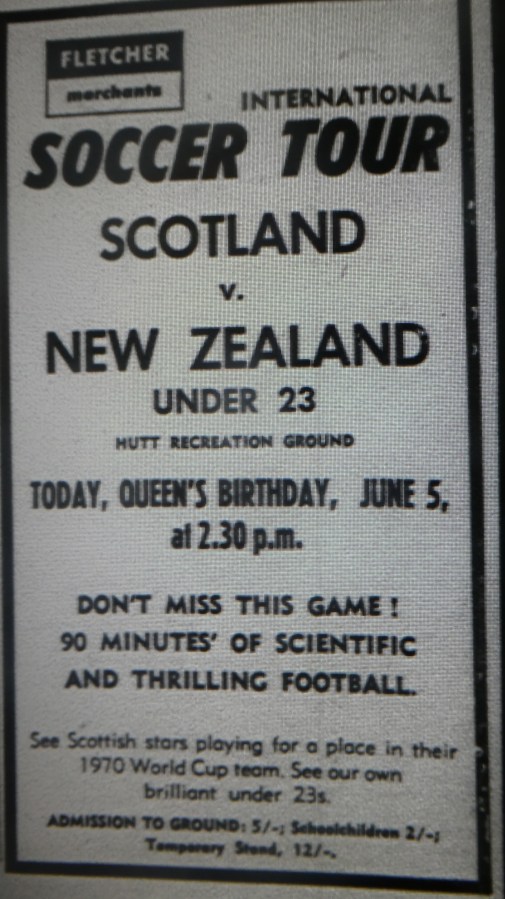
New Zealand took a surprise early lead through a fine goal by Mark Burgess who gathered a through ball and smashed it high into the net from 25 yards out. Scotland quickly levelled with McLean blasting in a penalty and ultimately won 7-2. Burgess would go on to focus on cricket and become a test star for the Black Caps.
It wasn’t an overly impressive performance from the visitors and for one Wellington reporter it seemed the differences were fairly subtle: “… the only facets of play in which Scotland outclassed the under-23s were speed and their ability to read a situation as it was developing. And from full-time professionals who are employed by some of Britain’s best clubs this was not what the large crowd expected.”
The New Zealand team included Scotsman George Lamont who was reunited with a former youth team colleague, Bobby Hope, now a star with West Brom. Former Hamilton Accies youth player Ken Ironside was also in the Kiwi line-up.
Ferguson turns on the style
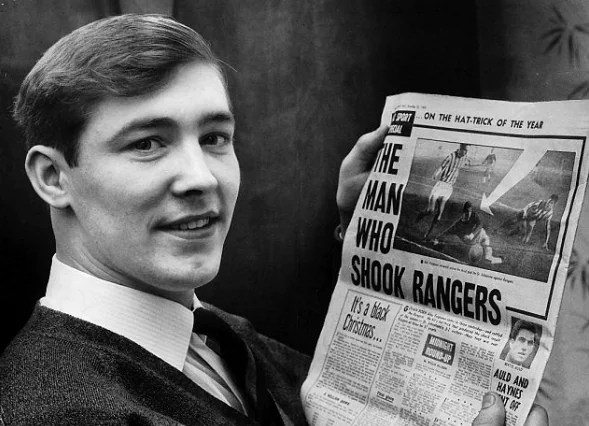
In Scotland’s second game against Auckland at Newmarket Park on the 8th of June, Ferguson was restored to the side and duly scored a 13-minute hat-trick. Penman added a fourth in the second half as the Scots cantered to a 4-0 win in front of a crowd of 15,000. Again there was a Scottish presence in the Kiwi team with Aberdonian Arthur Stroud starting in goal, accompanied by ex-Partick Thistle defender Tom McNab and centre forward George York who had only moved to the country a few months earlier.
The game was played on a Thursday and Merseyside-born New Zealand player Ray Mears had to really push his employers just to get time off to prepare for the game. “I wanted the day off and they wouldn’t let me. They wouldn’t let me go until about half past one, and the kick off was quarter to three. But if I was a rugby player they would have let me off easy, no questions asked.”
Striker John Legg was impressed by Fergie even if he didn’t know who he was. “I can remember one of the goals he scored and it was just an unbelievable strike. The ball came over and I thought he’d never get near it, but he really jumped for it and bang, it was in the net.”
On the final leg in Canada, Scotland played two more games, the second of which was against the national Olympic team which included another expat in Ralph McPate. He had left Third Lanark for North America at the age of 20.
Warming up for the Canada test, Scotland comfortably saw off the ‘Vancouver All Stars’ by four goals to one, Ferguson netting once, his final goal of the tour. There was a serious delay getting to Vancouver due to engine trouble on one flight which resulted in connecting flights being missed. Three days later the tourists were too good for the Olympic side in Winnipeg, winning 7-2 with Harper taking advantage of Ferguson’s absence and scoring five times.
Back home Brown told the media that it was a worthwhile tour with every match bringing victory, the wins against Australia particularly satisfying. He also welcomed the opportunity to see and spend time with young players who were in the early stages of their careers.
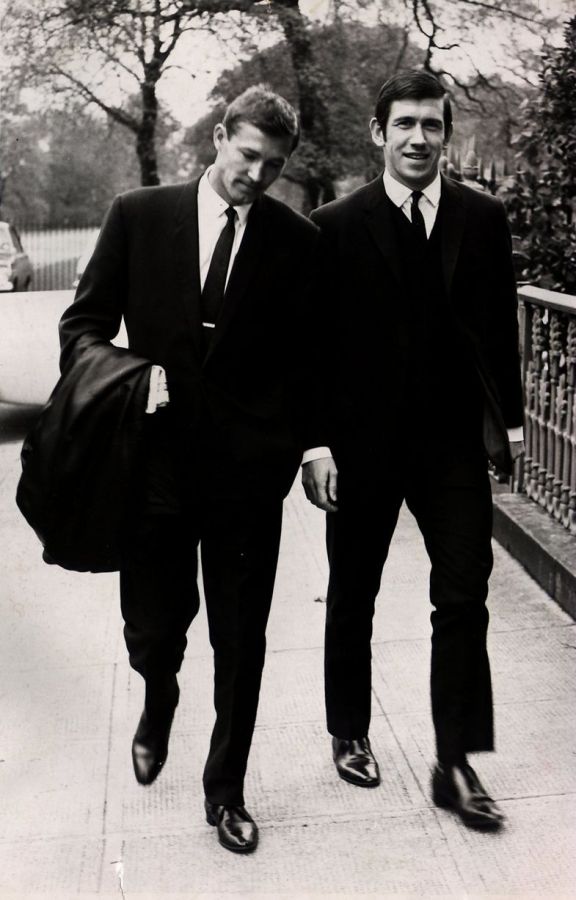
Alex Ferguson joined his beloved Rangers for the start of the 1967-68 season but would clash with manager Davie White and endure a torrid a two-year spell at Ibrox. He was unfairly held responsible for the 4-0 thrashing by Celtic in the 1969 Scottish Cup final because he failed to pick up Billy McNeill at a corner that resulted in the first goal. After that he was forced to train with the third team and then moved on to Falkirk.
These were the peak years of his career but those seven games he played on the 1967 tour were the only times he was asked to don the national team jersey. As a postscript, in 2021 the SFA decided to upgrade the status of five of the tour games – Israel, the trio of Australian games, and the Canadian Olympic team – to full internationals meaning that Alex Ferguson could very belatedly now claim to have been a full international player – not that the lack of official status had stopped him before!

 Beyond The Last Man