
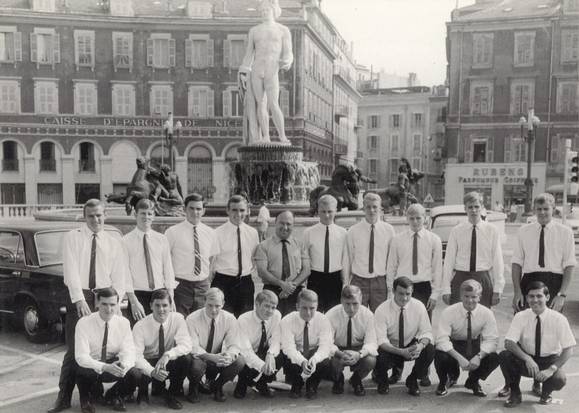
In the summer of 1967 Bill Crosbie, a young Liverpudlian, abandoned both his girlfriend and his job to embark on a world tour with the Dallas Tornadoes, an American soccer team, to play in war-torn Vietnam and experience a rocky reception in Singapore.
When the opportunity arose to play for the Tornadoes, Crosbie acted swiftly: “I got home around 10 PM,” he recounted. “I quickly got a haircut, packed a suitcase, and penned a resignation letter to the bus company I worked for. After that, I went to bed. At six the next morning, I said goodbye to my parents and caught a bus to Lime Street Station in Liverpool to catch a train. We didn’t have a phone, so I couldn’t even call my girlfriend to bid farewell.”
Crosbie, a full-back, joined another Scouser, Bobby Roach, on an early morning train to London from where they would fly to the south of France to meet the squad. The 19-year-old had his Beatles-esque mop top trimmed, as requested by the Yugoslavian coach Bob Kap. Kap aspired for a team embodying an all-American look, complete with short hair, Stetsons, jackets, and ties.
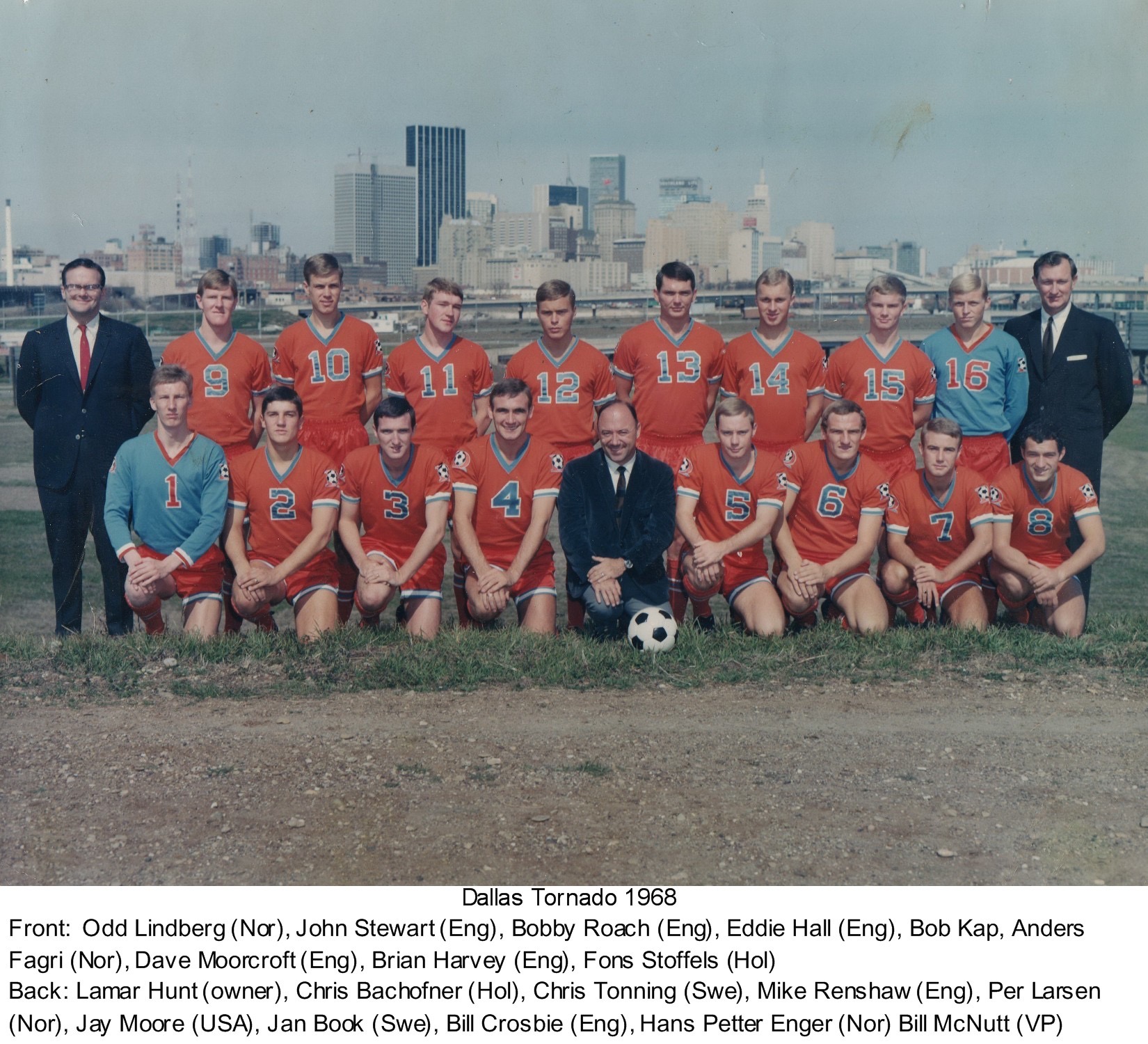
This extraordinary journey was spearheaded by Texan sports entrepreneur Lamar Hunt, who aimed to popularize soccer in the United States. Hunt’s North American Soccer League (NASL) was set to debut in 1968, and he wanted a Dallas team to be part of it.
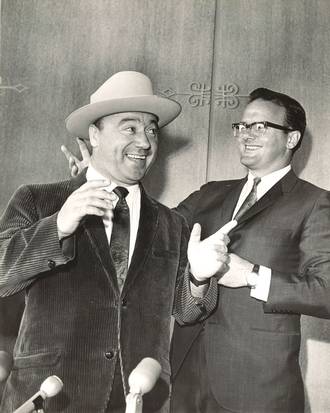
However, the challenge was that the team was far from American with only one of the 18 squad members actually being U.S-born, the rest hailing from Europe. Eight members came from England and predominantly from the Liverpool area. Besides Crosbie and Roach, the English group included defenders Eddie Hall, Brian Harvey, and John Stewart; midfielders David Moorcroft; striker Mike Renshaw, and winger Graham Stirland. All were amateurs, as the management had specified ‘top-class amateur footballers’ in their recruitment ads.
Moorcroft had featured in the FA Amateur Cup final for Skelmersdale United at Wembley in April, while Renshaw was a former youth player for Blackpool and had played a season with Chester City. Attracted by adventure and reasonable pay, the team embarked on this journey.
The tour commenced on August 22, 1967 in Cordoba, Spain, where the makeshift side suffered a 4-0 loss to a local team. Their second match in Istanbul saw them secure a credible 2-2 draw against Fenerbahce, amidst rough play from the home team. “Some of them were playing dirty,” recalled Swede Jan Book. “They were doing all sorts of things, including pinching our testicles.”
On October 12, the Tornados had been scheduled to be on the British European Airways Flight 284 flying from Athens to Cyprus. The squad missed the flight and so avoided certain death when the plane crashed into the Mediterranean, killing all 66 onboard.
As the tour progressed, the squad size dwindled due to injuries and departures. In Iran, Graham Stirland was unexpectedly sent home. “We arrived for our next flight, and Graham was taken aside by assistant coach Frank Randorf,” Crosbie reminisced. “Ten minutes later, Frank returned alone, informing us that Mr. Kap didn’t think Graham was fitting in, and he was sent home.”
In Pakistan, they endured a seven-hour bus trip to a mountain town, playing a match the same day, and later defeating the national team in Karachi. Crossing into India, British players and Kap, a naturalized Canadian, sailed through customs, while others waited days. In India, they played to crowds of 30,000, winning only their last game against the national team.
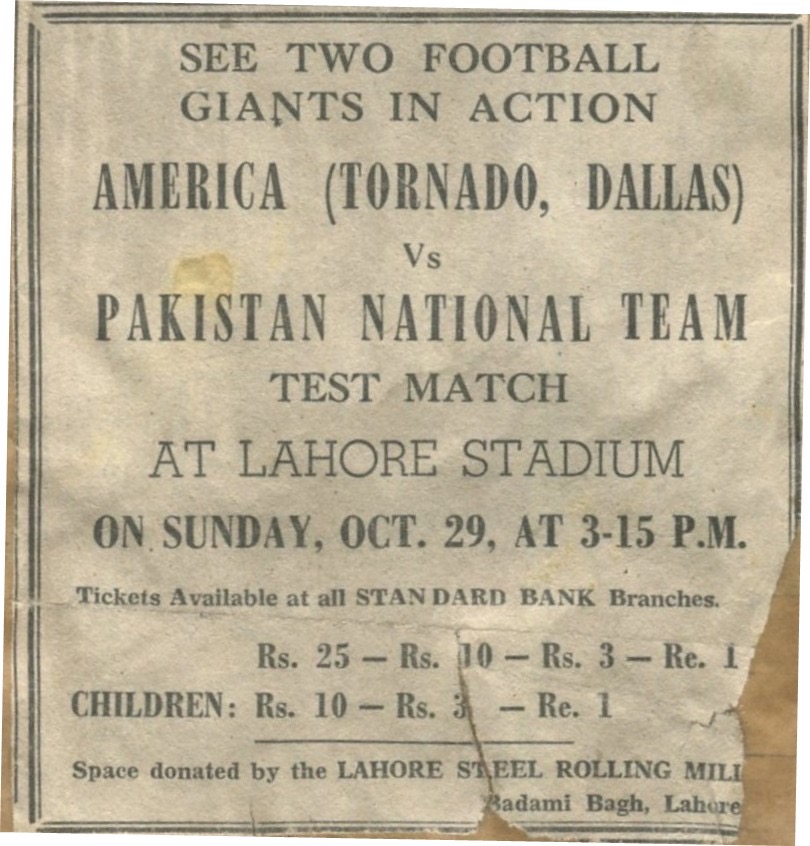
In Ceylon (now Sri Lanka), they won a controversial match 2-1. An ugly encounter, according to local media, it saw Eddie Hall sent off for rough play. They faced delays due to riots in Calcutta but continued on to Singapore, facing hostility both on and off the pitch.
In Vietnam amidst the intensifying conflict, the team managed to play amidst tight security and stern warnings from military police. The players were advised not to linger at any spot too long to avoid dangerous situations.
As Christmas approached they played in Taiwan, Japan, the Philippines, Australia, New Zealand and Fiji, ending the tour with varying degrees of success. By the finale the Tornadoes had played 45 games in five months, achieving a record of 10 wins, nine draws, and 26 losses. Their return was marked by a large welcome at Dallas airport.
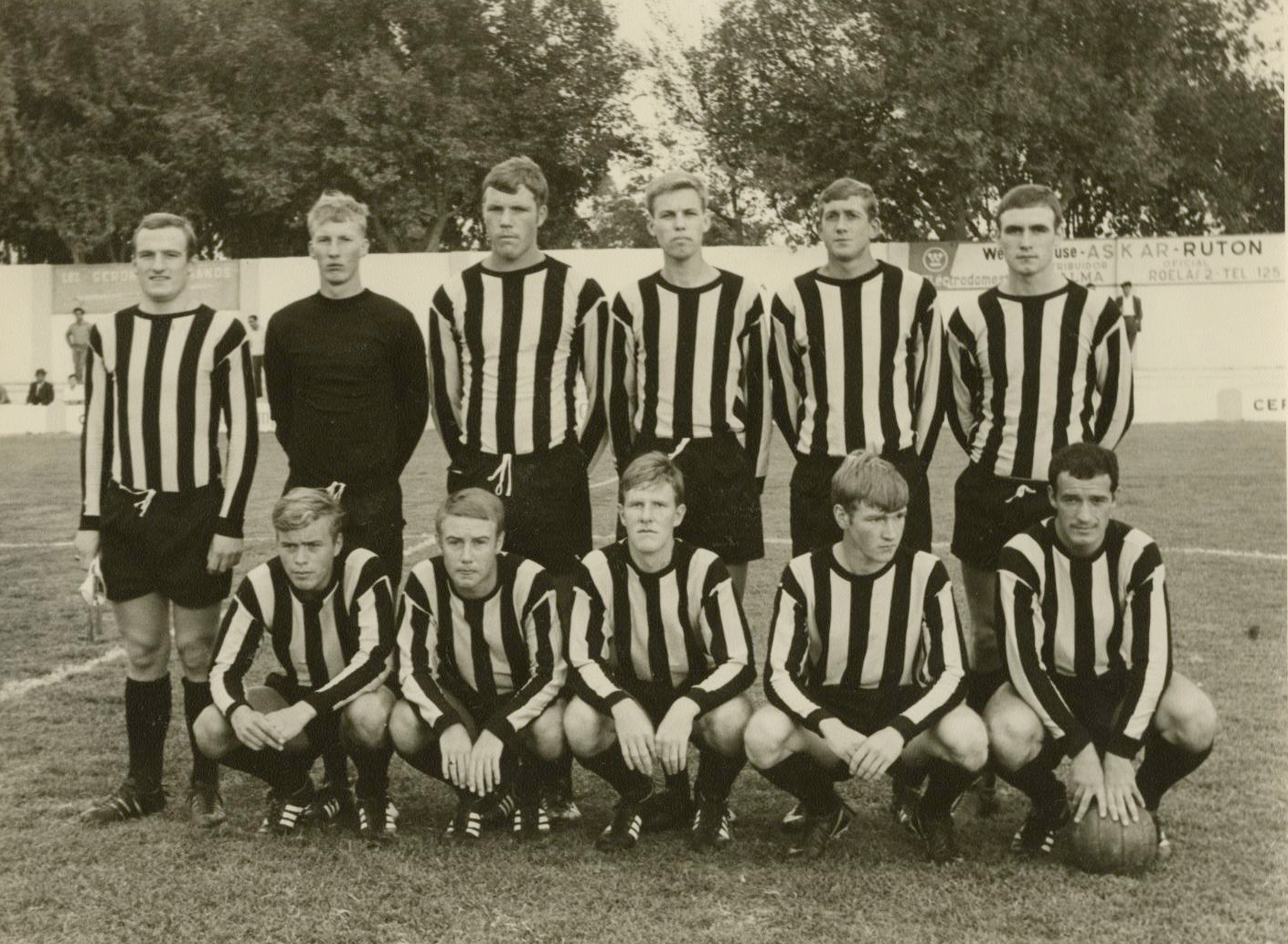
What the tour achieved remains debatable. It raised the profile of American soccer internationally but attracted limited media attention stateside. Nonetheless, for the players it was a transformative experience. David Moorcroft went on to play over 100 times for Tranmere Rovers, while Mike Renshaw became a key player for the Dallas side and later went on to manage the team. Odd Lindberg, the Norwegian goalkeeper, later played under Sven-Goran Eriksson at IFK Gothenburg.
Reflecting on the adventure, John Stewart said, “A lot of it felt like life or death, but it was an experience we will remember forever. It helped us grow not only as players but as individuals.”

 Beyond The Last Man