
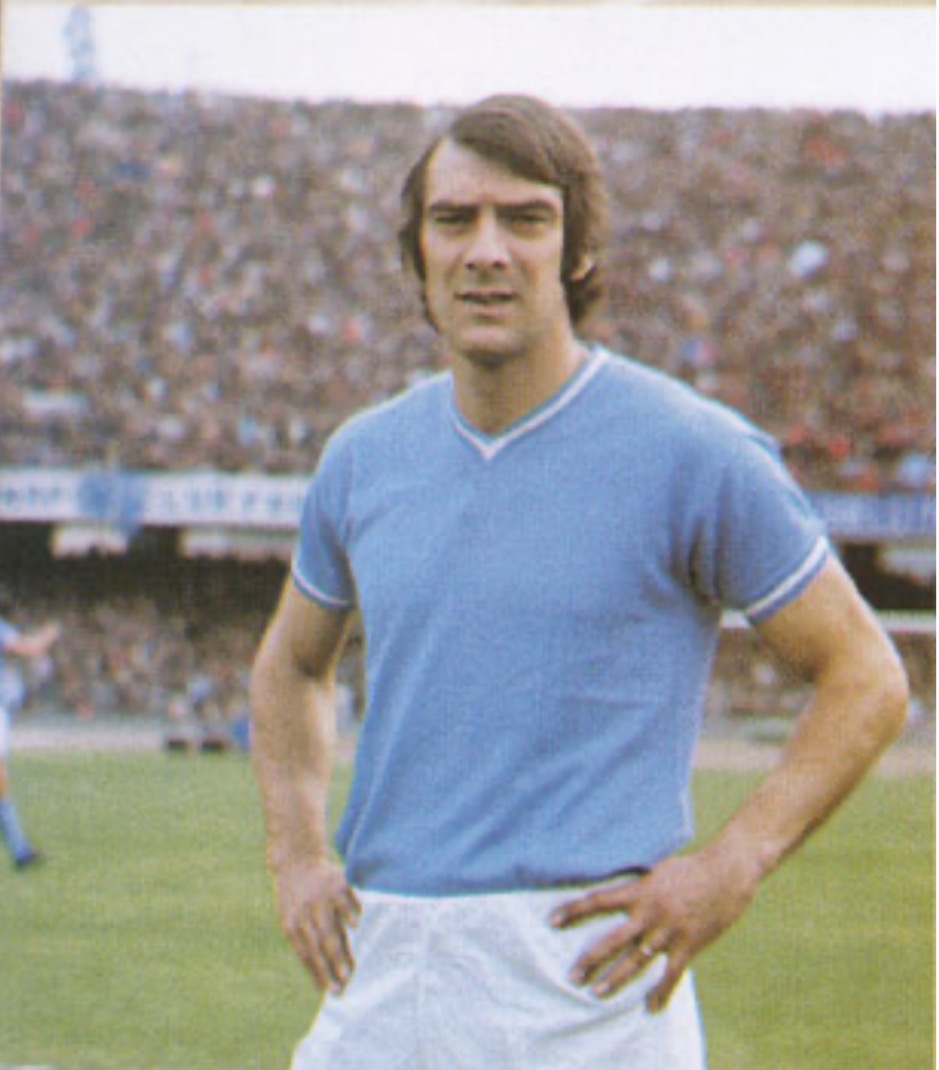
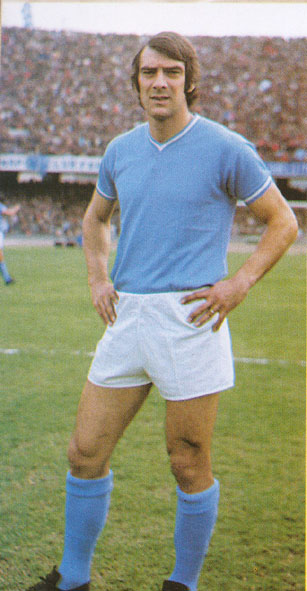
 While Sergio Clerici is a name more likely to conjure up blank looks than emotive images of great goalscoring moments from the past, this low-profile Brazilian striker of Italian heritage was a mainstay in glamorous Serie A for nearly two decades during the 1960s and 70s. His aggressive, defender-baiting style was popular with coaches and he played with reasonable success for a number of middle-order Italian clubs like Verona, Lazio and Atalanta.
Clerici’s main claim to fame was undoubtedly his remarkable longevity: he would play in Italy for 18 seasons following his unheralded arrival at little Lecco in 1960. To put that in a more modern perspective, Javier Zanetti played just one season longer for Inter. While Sergio Clerici would probably wish to be remembered best for his respectable haul of more than 150 goals, most older Italian football fans will identify him solely for being the last foreigner standing – the final foreign player left playing in Italy many years after the 1964 ban on imports came into force.
With calcio’s foreign stars being held responsible for limiting the opportunities of young Italians, the closing of the borders that year came as a knee-jerk response to protect the dwindling fortunes of the national side. More than 500 foreign footballers of varying quality and reputation had played in Italy over the years and the dubious distinction of being the last newcomer – for the next 16 seasons at least – fell to the Franco-Argentinian striker Nestor Combin when he joined Juventus just days before the ban came into force. Resident foreign players were permitted to continue their careers in Italy unaffected, although their protected status would be lost should they move abroad and later wish to return.
1960-78
There were winners and losers from the ban. Undoubtedly supporters of clubs both big and small hated it. Fans had long taken it for granted that the best players on the planet would naturally gravitate towards Serie A. Club presidents denied the opportunity to project their power and wealth in international markets were not in favour either and there was a collective campaign, conducted annually through the media, pushing for the ban to be rescinded. Franco Carraro at Milan was more sanguine and even-handed than most when he admitted that the rapid development of youngster Angelo Anquiletti into a top-class defender would have unlikely happened had the option to sign a big name foreigner existed instead.
But negatives certainly outweighed the few positives for the clubs. Before 1964 the world had been the marketplace for cash-rich Italian clubs; now the base of available players was much smaller and entirely domestic, driving up competition and prices. Meanwhile international results were too indistinct to make a case either way as to whether the national team actually benefitted from the ban anyway.
The clear winners from the ban were young Italians given greater opportunities of course and the foreign players already in Italy fortunate enough to have been on the right side of the drawbridge when it was pulled up. Not all foreign players loved living and playing in Italian football, but for most the great motivation was to maximise their time there as the financial rewards were so much more lucrative than they could achieve in their home countries.

1962-72
Inter’s Brazilian winger, Jair da Costa, had grown unhappy with the pressures of Serie A and was desperate to return to Brazil when made a convenient scapegoat for Inter’s end of season collapse in 1967. Pragmatism ruled though: Jair adopted a grin-and-bear-it approach and persevered in Italy for another five seasons. While West German international Helmut Haller wistfully acknowledged that returning home would help his international career, he was frank enough to admit that it just wasn’t possible when he was being paid five times as much at Juventus as he could ever earn in Germany.
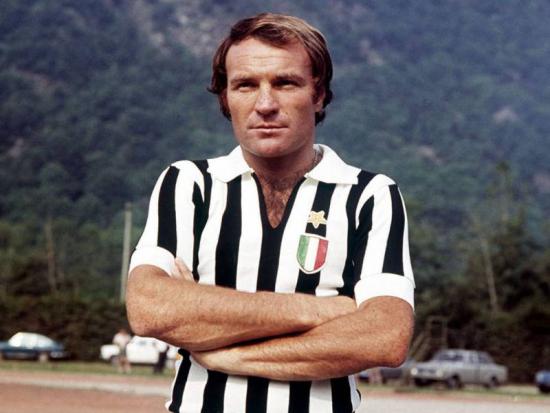
Genuine world-class foreign stars like Schnellinger and Luis Suárez would have continued playing in Italy right through until the 1970s whether there was a ban or not, so it was the less-lauded foreigners like Clerici who benefitted most from the opportunity of an extended career in Italy – along with the financial benefits that came with it. Such players became conveniently immune to the traditionally fickle fate of most Serie A foreign signings: welcomed as conquering heroes, drifting out of fashion within a couple of seasons and finally ditched in favour of whichever foreign-based player had become the latest flavour of the month.
With clubs remaining stubbornly in thrall to the ideal of fielding foreign players, the remaining imports were often recycled around them. As a player aged or declined to the point he was not good enough for one team, so a lesser club would step in and sign him up. Clerici was a perfect example of this and the seven different Serie A clubs he played for remains a record number for a foreign player to this day.
1958-76
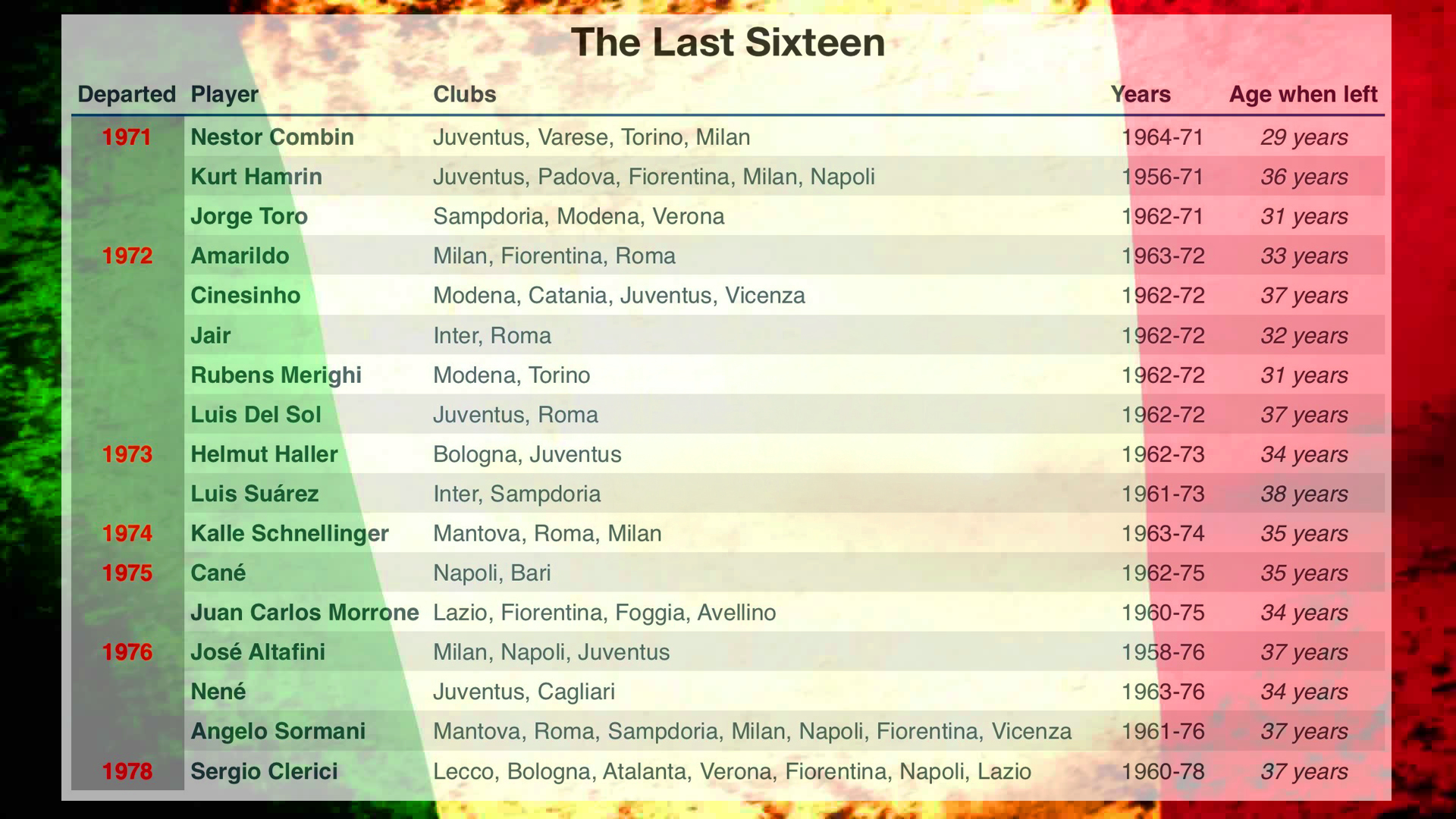
With the departures of the Peruvian Victor Benitez and the Spaniard Joaquín Peiró, by the start of the 1970/71 season Italy’s foreigner total had dwindled to just sixteen, all but two – Merighi and Toro at Modena – based in Serie A. This was already six seasons after the ban had started and it would take a further eight before this particular group of players had all moved on – or retired in most cases. Their longevity was remarkable: 13 of those 16 players had careers in Italy of longer than a decade; 15 of them were over 30 when they left, 9 were over 35 and both Altafini and our man Clerici amassed 18 season careers in Serie A.
Sergio Clerici, Italy’s last foreigner standing, finally departed Italian shores in 1978 after a season on the fringes at Lazio. With the import ban lifting in 1980 after sixteen long years, ultimately only two of those seasons it was in place were played out totally foreigner-free. Italian football’s powers of improvisation to keep their beloved foreign stars involved in the game to whatever extent it could was impressive and a clear indicator that nothing will ever shake the country’s collective fascination with the cult of the foreigner.

 Beyond The Last Man