
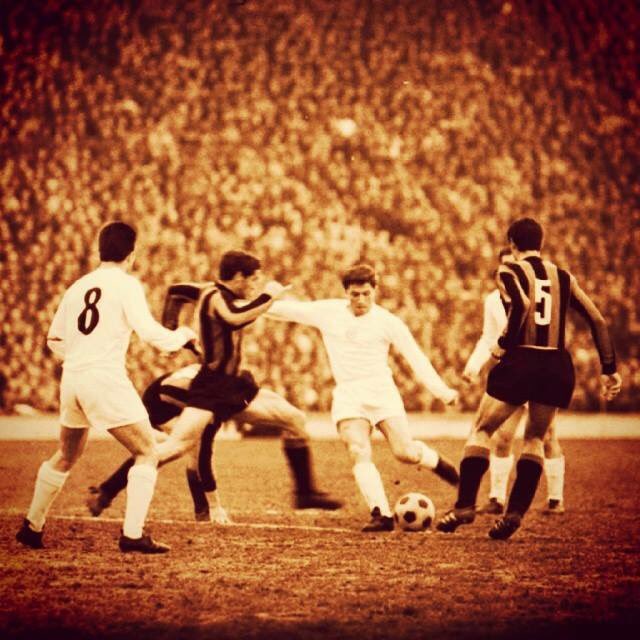
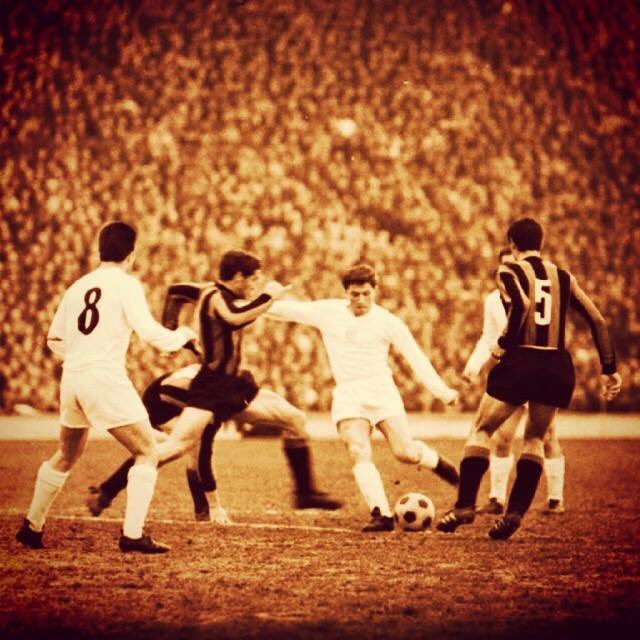
Over three games and 270 minutes against the venerated Italian superstars of Internazionale, a  little-known Bulgarian club side alerted the footballing world to the growing strength of the game in that dark corner of the Balkans. Just a single goal was enough to prevent CSKA Sofia (then known as CSKA Red Flag) from reaching an unlikely European Cup Final appearance in 1967 against another lesser-known club from a provincial League in Celtic.
After the initial dominance of European club competitions by clubs from Spain, Portugal and Italy, the late 1960s brought greater liberalisation to the game and saw clubs from smaller nations start to make a real impact. Bulgaria would be one of those nations to have their moment in the sun after occupying a broadly peripheral role before that 1966-67 season.
Since their first foray into the European Cup in 1956, Bulgarian clubs had acted as little more than a minor irritant to stronger sides. For seven consecutive years their representative was CSKA and their record was at least consistent – usually a victory against a minnow in the preliminary round followed by defeat to a more established club in the first round proper. When Spartak Plovdiv, Lokomotiv Sofia and Levski Sofia earned their turns in the continent’s premier competition the outcome was identical.
In those days because of the complexities of travel and the continent’s geopolitical issues, home advantage was significantly more marked than it is today and Bulgarian clubs were the epitome of the hard-to-beat on their home soil but abject travellers stereotype. In the first decade of the European Cup only PSV Eindhoven won an away game in Bulgaria, while CSKA’s victory in Belgrade against Partizan in 1962 was the only Bulgarian away win. And there were many heavy away defeats.
When CSKA Sofia returned to Europe’s premier competition in 1966 after a three-year absence, the opposition they could face looked as daunting as ever with mainstays like Real Madrid, Anderlecht, Dukla Prague, Vasas Budapest and Inter joined by first-timers and up-and-comers like Celtic, Liverpool, Sporting Lisbon, Vojvodina and 1860 Munich. But 1967 would be the season that Bulgarian clubs would breakthrough for the first time to earn semi-final appearances for both CSKA Sofia in the European Cup and Slavia Sofia in the Cup Winners Cup.
As the main sports club of the Bulgarian army, CSKA Sofia benefited from its favoured status within the Communist state and their ability to secure the services of the best young players called up to perform national service. The earlier part of the decade brought them talents like Stoyan Yordanov, Asparuh Nikodimov and hotshot striker Dimitar Yakimov and this team was now well-seasoned and ready to make its mark. That the opposition CSKA would face during the 1966-67 campaign was gentle did no harm either of course.

CSKA advanced through the competition by defeating the champions of Malta, Greece, Poland and Northern Ireland; a modest set of opponents but with the recurring problem of their poor form away from home still apparent. Only tiny Sliema Wanderers from Malta were defeated on their own soil and in the Second Round CSKA came very close to squandering a first-leg four goal lead against Górnik Zabrze. The Polish champions scored three first-half goals in the return and CSKA Sofia desperately held out in the second-half to ensure progress by the narrowest of margins.
The draw for the semi-final would not be so forgiving and pitted the Bulgarians against the favourites Internazionale, winners in 1964 and 1965 and semi-finalists the previous season. Perhaps the tight defensive game that CSKA relied on was tactically the best approach to neutralise an opponent who favoured a similar approach. The first leg in Milan was a cagey affair with few chances. The visitors made things harder for themselves when forward Kiril Raikov was sent off after half an hour for punching Luis Suárez and the home side seemed to take the advantage when captain Giacinto Facchetti put them ahead just before half-time.
But CSKA showed the sort of tenacity that had been historically absent from their European away performances. They absorbed pressure for long periods and grabbed a surprise equaliser from Nikola Tsanev after 66 minutes. The second leg followed the pattern of the first with Facchetti again giving Inter the lead just after the hour, but CSKA staying in contention and finding an equaliser from Nikolay Radlev fifteen minutes later.

These were the years before extra-time and penalty kicks and it meant a third match was required. The neutral venue was originally going to be Graz in Austria, but Inter were determined to seek out every possible advantage they could secure for themselves. Knowing the need for communist states to secure transferable western currency whenever the chance arose, Inter offered the Bulgarians the majority of the gate receipts if the game was switched to Bologna – technically still a neutral venue but in reality akin to a home game for the nerazzurri. The decision to accept was taken above the heads of CSKA Sofia officials.
This third game was another low-excitement encounter. Inter youngster Renato Cappellini scored after 12 minutes and CSKA could not dig deep once again to find an equaliser. There was no disgrace in the manner of defeat for CSKA and these games represented the best European performances in their history to that point.
Meanwhile CSKA’s local neighbours and rivals Slavia Sofia had been making strong progress of their own through the Cup Winners Cup, in keeping with their domestic reputation as a good cup team lacking the consistency to challenge for league titles. Like CSKA this was a team with a strong backbone of seasoned Bulgarian internationals – defender Aleksandar Shalamanov was the reigning footballer of the year, Simeon Simeonov was the international keeper and Lyuben Tasev and Mihail Mishev were regular scorers up front – Mishev had scored Slavia’s first-ever European goal in 1963.
Swansea City, Racing Club Strasbourg and Servette Geneva were overcome following the familiar Bulgarian pattern of small defeats on their travels countered by bigger victories at home. Similar in style to CSKA Sofia with a defend and counter-attack style, Slavia proved unable to stifle Scottish giants Rangers in the semi-finals and the Scots deservedly won both legs by a single goal.
Club achievements in the 1966-67 season crowned a successful time for the game in Bulgaria as this usually fringe footballing nation enjoyed the fruits of a golden generation of talent led by national legends such as Georgi ‘Gundi’ Asparuhov, Dimitar Yakimov, Petar Zhekov and Aleksandar Shalamanov. Consecutive qualifications for the World Cups of 1962, 1966 and 1970 was an achievement of note even if Bulgaria ultimately made little mark at any of the tournaments, meanwhile leaning on the traditional Eastern European advantage of being classed as amateurs, the national side won a silver medal at the 1968 Olympic Games in Mexico.
Like so many countries from the former Eastern Bloc, Bulgarian club football’s highlights can be divided into the two distinct phases of pre and post communism. Pre-1990 Bulgarian clubs punched their weight and while there would never again be the high of two semi-finalists in a single season, there were a number of stand-out moments – mostly from CSKA.
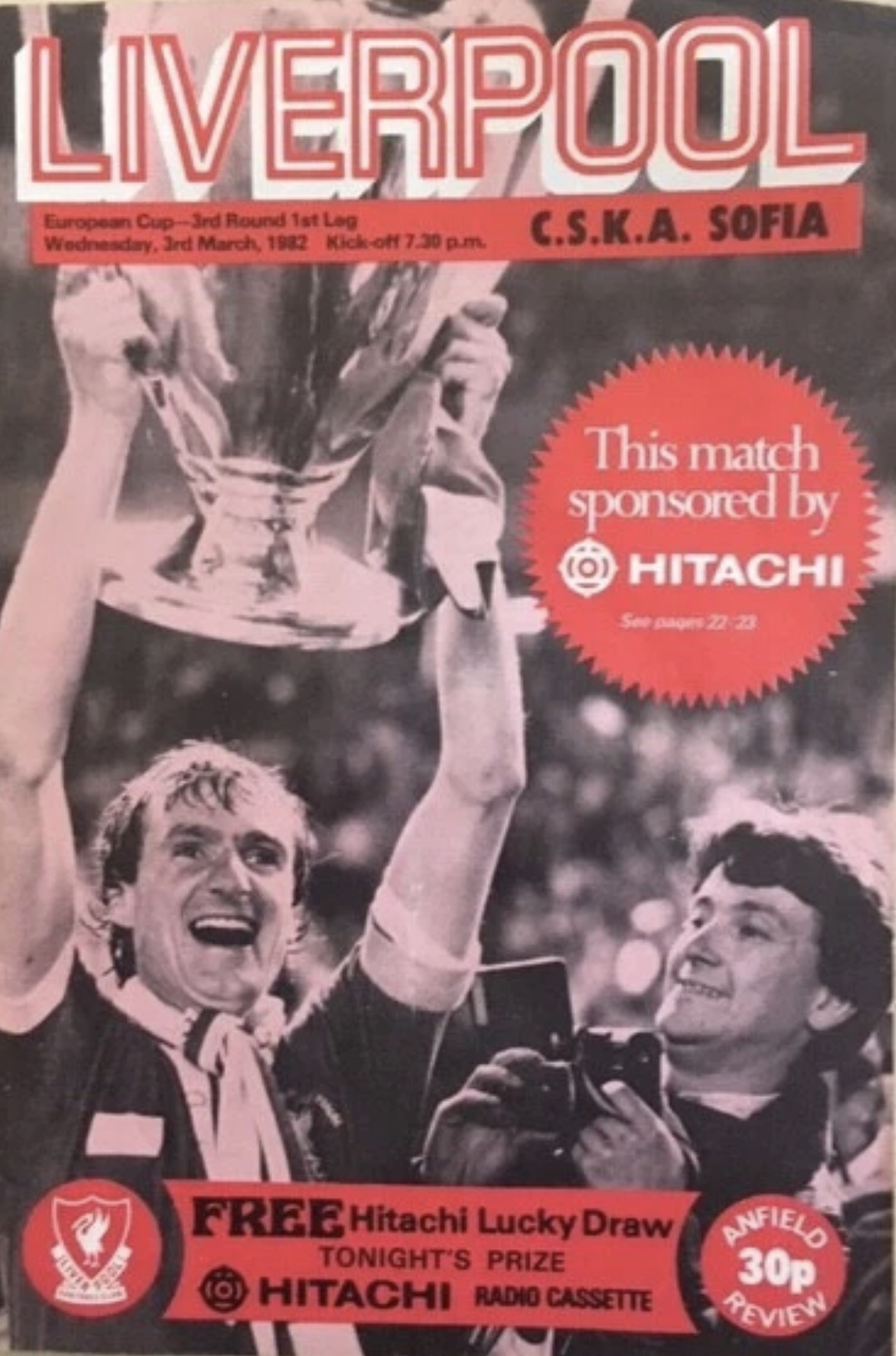
The army club matched their 1967 peak by reaching another European Cup semi-final fifteen years later. Defeating the champions of Spain, Real Sociedad, in the opening round was a substantial achievement in its own right, but CSKA miraculously went on to eliminate the holders and favourites, Liverpool, in the Quarter Finals. Two goals by Stoycho Mladenov, the second in extra time, helped CSKA overcome a single goal deficit from the first leg at Anfield and give Bulgaria the greatest night in its European history.
Bayern Munich ended their run in the semi-finals just as they had done at the quarter final stage in the 1973-74 season, a campaign in which CSKA Sofia eliminated the holders Ajax. Nottingham Forest became another victim of the holder-slayers of CSKA Sofia in 1980 and no other club on the continent eliminated more reigning champions during the history of the European Cup than CSKA. There was one further semi-final appearance in 1988-89, this time in the Cup Winners Cup, and elimination by Barcelona.

Beyond the four European semi-finals reached by CSKA and Slavia, on eleven occasions Bulgarian clubs reached European quarter-finals. CSKA of course led the away again with four European Cup quarter-final appearances in 1957, 1974, 1981 and 1990. Levski Sofia also managed four in the Cup Winners and UEFA Cup between 1970 and 1987, Botev Plovdiv played in the Cup Winners Cup quarter-finals in 1963, provincial club Beroe Stara Zagora did the same in 1974 and Lokomotiv Sofia reached the last eight of the UEFA Cup in 1980.
Post 1990 the landscape changed completely for Bulgarian clubs. The chaos of the post-communist years and the withdrawal of state funding brought a significant downturn in the fortunes of the major clubs. Since the 21st of March 1990 when CSKA Sofia lost 3-1 to Marseille in the Stade Velodrome to exit the European Cup on a 4-1 aggregate score, on only one occasion has a Bulgarian club even reached a European quarter final. Levski Sofia emerged from the UEFA Cup group stage and overcame Artmedia Bratislava and Udinese to reach the last eight where they found Schalke 04 too strong.

The modern Bulgarian game looks very different to how it did in its glory days of the 60s, 70s and 80s. While the traditional Sofia clubs are still there, their pre-eminence has passed to regional arrivistes like Litex Lovech and especially Ludogorets Razgrad who have dominated the League in an unprecedented manner since the early 2010s. The money behind these clubs has bought domestic success but made little impact further afield and neither club has gone further than the Round of 32 of any UEFA competition. There is little optimism that this situation is going to change anytime soon.


